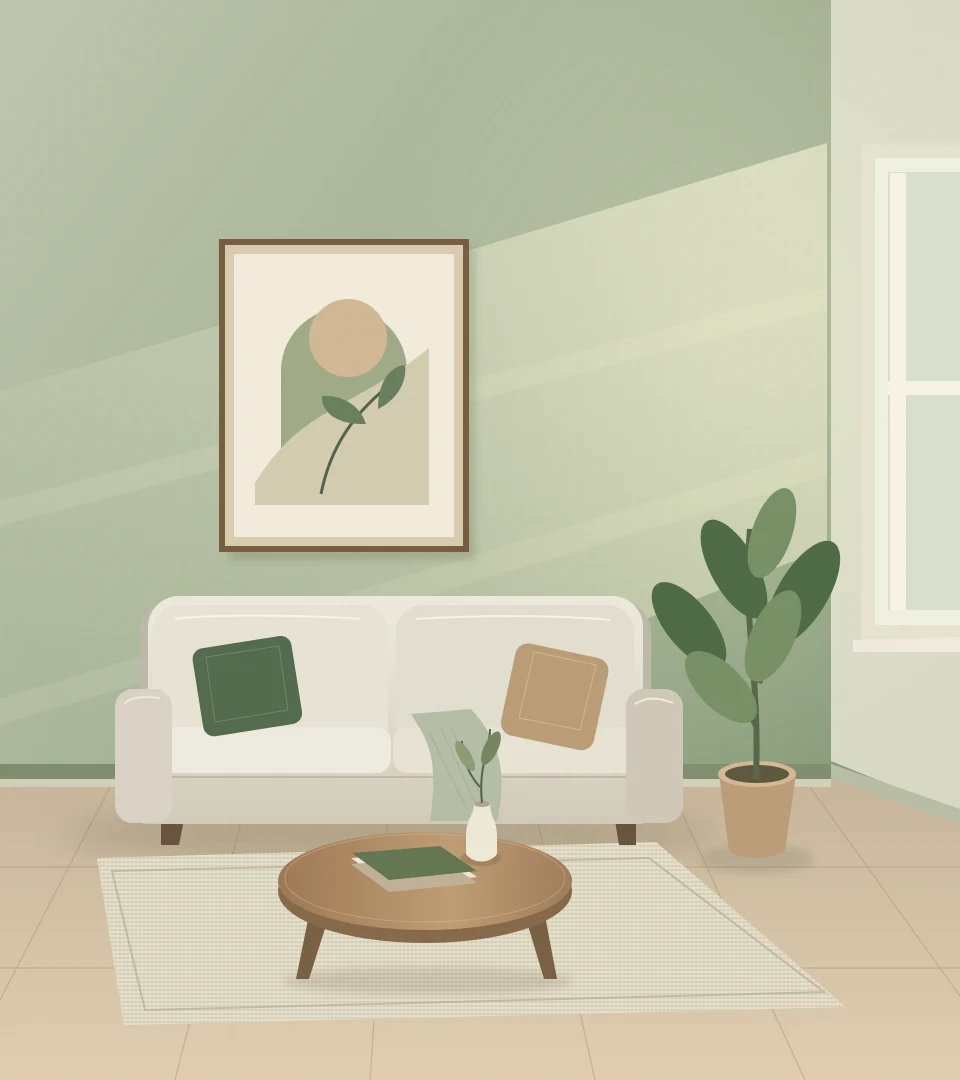
Choose a colour using a physical sample in the room where it will be used. A screen image is a starting point for discussion, not a final specification. Agree the colour code and finish before ordering the full quantity.
Make a short, useful shortlist
Start with the elements that will remain: flooring, doors, kitchen fronts and large furniture. Pick a few candidate colours and label each sample with its manufacturer, product and code. This prevents confusion between similar shades.
Compare in the room
Look at the samples at different times of day and under the lamps you normally use. Compare them beside the floor and trim, rather than judging an isolated patch. If two walls receive very different light, view a sample against both.
Specify more than the colour name
- Manufacturer and product range.
- Exact colour code or tinting reference.
- Matte, satin or another agreed finish.
- Which walls, ceilings and accent areas receive each colour.
- The approved physical sample and where it can be checked.
Read the matte and satin comparison before making finish choices.
Keep a record for future repairs
Save the product label and purchase reference. Ask how touch-ups will be assessed; a later local repair may look different from repainting a complete wall. Discuss a sample with the painter before selecting a decorative finish.
This general guide was prepared with AI assistance. Technical sources are linked in the text; the specific product instructions and an assessment of the property take precedence over general examples.